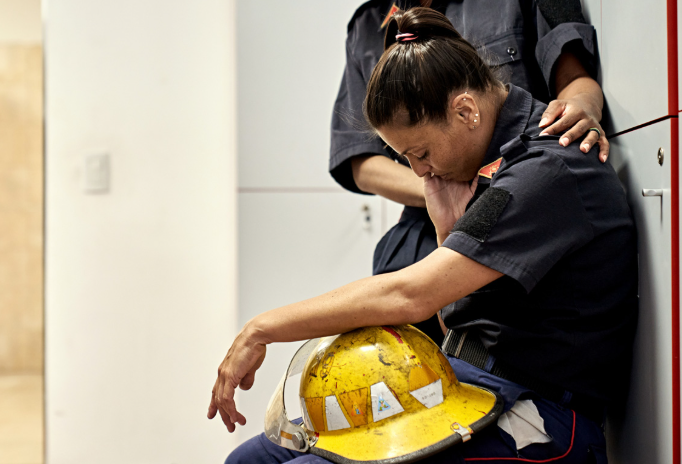
How Trauma Affects First Responders’ Mental Health

Every shift, firefighters, paramedics, law enforcement officers, and emergency dispatchers absorb experiences that most people will never face in a lifetime. A bad car accident. A child who didn’t make it. A scene that stays with you long after the paperwork is done. The human body and brain are not built to process that kind of exposure on a weekly basis, and the science now confirms what many first responders have quietly known for years: the psychological toll is real, it accumulates, and it follows people home.
This article looks at what occupational trauma actually does to the brain and body, how it differs from the stress most workers experience, what warning signs tend to appear before things get serious, and what kinds of support have shown real results for people in emergency services careers.
Why First Responder Stress Is Different
Most workplace stress involves deadlines, difficult coworkers, or financial pressure. That kind of stress is unpleasant, but it rarely produces the neurological and hormonal cascade that comes with witnessing violence, death, or mass casualty events. First responders deal with that second category repeatedly, and often without adequate time between calls to recover.
Researchers use the term “cumulative trauma” to describe what happens when a person absorbs distressing incidents over months and years without full recovery in between. Each event may feel manageable on its own. Over time, however, the nervous system begins to treat ordinary situations as threats. This is not weakness. It is a predictable physiological response to extraordinary conditions.
There is also an organizational culture dimension that sets first responder stress apart. Many departments still carry an informal expectation that personnel should be able to handle whatever they encounter without complaint. Asking for help can feel like admitting you cannot do the job. That stigma delays treatment and pushes people toward unhealthy coping strategies instead.
See also: The Future of IoT Technology
The Most Common Mental Health Conditions in Emergency Services
Several diagnosable conditions appear at elevated rates among first responders compared to the general population. Understanding each one helps both individuals and their families recognize what might actually be happening.
| Condition | Core Features | How It Often Appears in First Responders |
| PTSD | Intrusive memories, hypervigilance, avoidance, emotional numbness | Flashbacks tied to specific calls; difficulty sleeping; irritability at home |
| Depression | Persistent low mood, loss of interest, fatigue, hopelessness | Withdrawal from colleagues and family; increased cynicism; missed shifts |
| Anxiety Disorders | Excessive worry, physical tension, panic responses | Dread before shifts; physical symptoms like chest tightness or nausea |
| Substance Use Disorder | Problematic reliance on alcohol or other substances | Drinking to fall asleep; using substances to manage emotional numbness |
| Moral Injury | Guilt and shame from perceived ethical violations | Second-guessing past decisions; strong sense of having failed or done wrong |
According to a 2018 report from the Ruderman Family Foundation, police officers and firefighters are more likely to die by suicide than in the line of duty. That single statistic reframes the entire conversation about risk in emergency services careers. Physical danger is real and visible. Psychological danger tends to be invisible until it reaches a crisis point.
Early Warning Signs Worth Taking Seriously
One of the challenges with mental health conditions is that they often develop gradually. People adapt to new baselines without realizing how far things have shifted. Friends and partners frequently notice changes before the individual does. The following warning signs are worth attention, not because any single one is diagnostic, but because patterns matter.
- Sleep problems that persist for more than a few weeks, including difficulty falling asleep, staying asleep, or recurring nightmares
- Increased use of alcohol or other substances, especially as a way to wind down after shifts
- Emotional numbness or a feeling of being disconnected from people you care about
- Heightened irritability or anger that seems out of proportion to what triggered it
- Difficulty concentrating or making decisions that previously felt routine
- Pulling away from hobbies, relationships, or activities that used to bring satisfaction
- Physical symptoms without a clear medical cause, such as chronic headaches, gastrointestinal issues, or unexplained fatigue
- Intrusive thoughts or mental replays of specific incidents, especially at quiet moments
None of these signs mean something is irreparably wrong. They mean the nervous system is signaling that it needs attention. Catching that signal early, before symptoms become entrenched, makes a significant difference in how well someone responds to support.
What Actually Helps: Treatment Approaches With Evidence Behind Them
The good news is that effective treatment exists. First responders who access the right support often make substantial recoveries, return to work, and report improved relationships and quality of life. The key is finding care that is specifically designed for the occupational context, because standard outpatient therapy does not always address the layers of stigma, shift work schedules, and operational culture that shape the first responder experience.
Evidence-Based Therapies
Several therapeutic approaches have strong research support for trauma and PTSD specifically. Cognitive Processing Therapy (CPT) helps individuals examine and restructure distorted beliefs that formed around traumatic events. Eye Movement Desensitization and Reprocessing (EMDR) uses bilateral stimulation to help the brain process memories that have become “stuck.” Prolonged Exposure therapy gradually helps people approach trauma-related memories and situations in a controlled way, reducing avoidance over time. All three are recommended by the American Psychological Association and the U.S. Department of Veterans Affairs for trauma treatment.
Peer Support Programs
Peer support programs pair first responders with trained colleagues who have lived experience with mental health challenges. Research suggests that first responders are more likely to open up to someone who understands the job from the inside. Peer supporters are not therapists, but they can reduce isolation, share resources, and encourage people to seek professional help before a crisis develops. Many departments have begun investing in these programs specifically because of the trust gap that exists between personnel and outside clinicians.
Specialized Programs Designed for First Responders
Generic mental health services, while valuable in many contexts, sometimes miss the mark for people in emergency services. Providers who understand duty-related trauma, shift schedules, confidentiality concerns, and the specific psychological demands of the job tend to get better results. Dedicated programs offering mental health treatment for first responders are built around those realities, often incorporating flexible scheduling, peer integration, and clinicians with direct experience treating this population.
Barriers That Keep People From Seeking Help
Understanding what gets in the way of treatment is just as useful as understanding what treatment options exist. Several barriers come up consistently in research on first responder mental health.
- Stigma within the department: Fear that colleagues or supervisors will view help-seeking as a sign of weakness or unfitness for duty.
- Confidentiality concerns: Worry that information shared with a mental health provider could affect employment, security clearances, or career advancement.
- Access and scheduling: Standard business-hours therapy does not work well for shift workers. Finding providers who offer evening or weekend appointments can be genuinely difficult.
- Cost: Even when insurance covers some mental health care, copays and out-of-pocket costs create barriers, particularly for families already managing financial stress.
- Not recognizing symptoms: Many first responders normalize their symptoms because they assume what they feel is just part of the job. Without education, early warning signs go unaddressed.
Some departments have begun addressing these barriers through policy changes, such as making peer support contacts available around the clock, separating wellness programs from disciplinary oversight, and creating anonymous pathways to connect with care. Cultural change is slow, but it is happening in many agencies across the country.
Supporting a First Responder You Care About
Family members and close friends often bear witness to changes in a first responder’s behavior before anyone else does, and they frequently feel unsure about how to respond. A few principles tend to be consistently useful. First, approach the conversation without judgment and without trying to fix anything immediately. Listening matters more than advice. Second, avoid framing mental health struggles as character flaws or as something the person should just push through. Language shapes how people receive support. Third, know that pressure to seek help can backfire, especially in a population that is trained to appear in control. Consistent, patient presence tends to be more effective than ultimatums.
Sharing information about resources quietly, without making it a confrontation, gives the person room to consider options on their own terms. Many first responders who eventually sought help reported that a family member or trusted colleague planting a seed was what started the process.
A Broader Picture of What Recovery Looks Like
Recovery from occupational trauma does not mean forgetting what happened or becoming indifferent to difficult calls. It means developing the capacity to process those experiences without being overwhelmed by them. It means sleep that restores rather than terrifies. It means being present with the people you love instead of physically there but emotionally somewhere else entirely. Many first responders who have gone through treatment describe a version of themselves on the other side that is more grounded and self-aware, not less capable.
The field of first responder mental health has grown considerably over the last decade. Research is accumulating, specialized providers are multiplying, and cultural attitudes within departments are slowly shifting toward openness. The gap between what first responders experience and what support they actually receive is narrowing, and that is genuinely worth acknowledging. Getting help earlier rather than later remains the single most consistent factor in better outcomes, and recognizing the signs, understanding the options, and talking about it honestly are all parts of how that happens.