How Solar for Warehouses Can Reduce Energy Costs by 40% (Contractor Insights)

Utility costs have been the highest ongoing cost for warehouse operations. Electric usage can pile up fast, from lighting large warehousing spaces to running machinery and climate control systems. By 2026, businesses are finding solar for warehouses to be the best way to reduce these costs—typically by 40% or greater.
From what seasoned commercial solar panel contractors tell you, transitioning to solar has stopped being purely about sustainability and is now an effort in creating a smarter and cheaper way of doing business. So, how does solar cost savings work, and why is it the secret sauce to warehouse owners’ growing wish list?
The Great Energy Cost that Warehouses Have
Before we understand the savings, it is vital to know why warehouse energy consumption is so high:
- Big floor spaces need constant illumination
- HVAC system to regulate the temperature for goods.
- Automation systems and machinery
- Longer hours of operation at most facilities
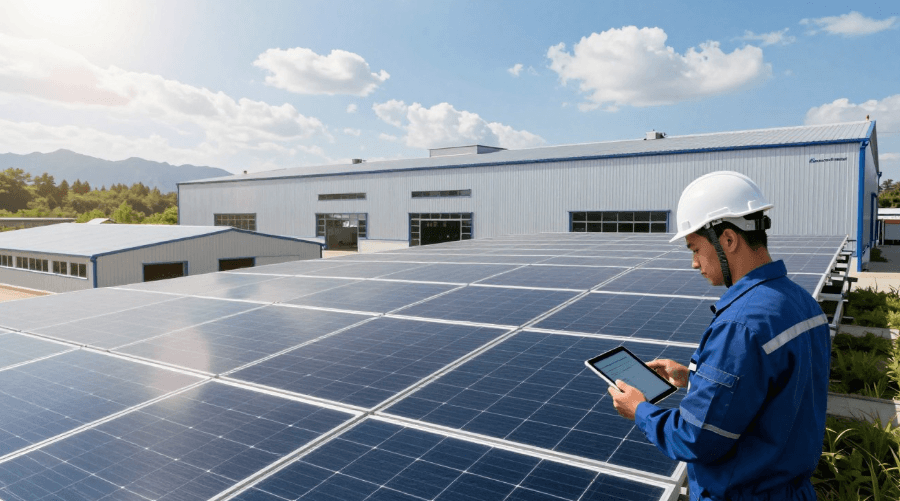
That continual high demand makes warehouses perfect candidates for solar. With solar for warehouses, businesses are able to cover a large part of their electricity consumption.
How Solar Cuts Energy Cost By 40%
The figure of 40% cost reduction is not just a sales pitch—there are tangible operational innovations behind it. Some commercial solar panel contractors give their own additional mechanisms as to how these savings work.
- On-Site Energy Generation
Warehouses are now also producing electricity from the sun instead of depending completely on the grid via solar systems. This directly reduces utility bills.
- Lower Peak Demand Charges
In peak hours, electricity prices may jump. As you know, solar panels produce power during the day, coinciding with peak demand (when costs tend to be the highest), to help companies avoid costly peak charges.
- Net Metering Opportunities
Excess solar energy produced for warehouses can often be redirected back to the grid, receiving credits or offsetting future utility bills in many markets.
- Reduced Dependency on Grid Power
To counter the rising prices and tariffs of electricity, warehouses are much less affected as they produce energy by themselves.
Function of Commercial Solar Panel Contractors
Proper planning and execution are crucial for the success of any solar project. That is where commercial solar panel contractors take the pivotal role.
What They Bring to the Table:
- Audit of energy consumption patterns
- This involves designing custom solutions to suit your warehouse.
- Efficient installation with minimal disruption
- Performance monitoring systems
- Ongoing maintenance and support
Skilled commercial solar panel contractors find you a solution that caters to your needs and also provides maximum savings.
Real ROI: Beyond Just Savings
Although saving 40% on energy costs is a good thing, the advantages of solar for warehouses run deeper.
Additional Financial Gains:
- ROI in 4–6 years
- Long-term savings for 20–25 years
- Increased property value
- Tax incentives and rebates
Taken together, these benefits make solar either the best or one of the very best investments a warehouse can make.
Technology Advancements in 2026
With each passing year, modern solar systems can operate with a much higher efficiency and reliability, resulting in greater savings.
Key Innovations:
- Higher output with high-efficiency solar panels
- Improve energy conversion using smarts in inverters
- AI-enabled monitoring systems for real-time tracking
- Longer use of energy through battery storage
The subject matter of these technologies is incorporated within the construct of a top commercial solar panel contractor to ensure they install an optimal system.
Overcoming Common Challenges
The benefits, however, are also clear if we allow for the fact that some businesses hesitate to adopt them due to perceived difficulties.
- Initial Investment
Despite any up-front prices, financing opportunities — loans, leases, and PPAs specifically — make solar more disposable.
- Roof Suitability
Structural assessments to make sure there is capacity for solar.
- Maintenance Concerns
Maintenance on solar systems is very limited, and commercial solar panel contractors typically provide service plans.
Sustainability Benefits
Solar for warehouses not only saves you money. It is also environmentally friendly.
Key Impact:
- Reduced carbon emissions
- Lower reliance on fossil fuels
- Stronger ESG (Environmental, Social, Governance) performance
- Enhanced brand reputation
Solar is entirely a branding and cost-saving opportunity to a lot of businesses today.
See also: How Local SEO Can Transform Small Businesses Into Industry Leaders
Contractor Insights: What Maximizes Savings?
What Commercial Solar Panel Contractors Say Are Critical to Maximum Savings
- Sizing the system correctly according to actual energy consumption
- Best orientation of the panel for maximum exposure to sunlight
- Regular system monitoring and maintenance
- Taking advantage of available incentives
When these factors overlap, warehouses can repeatedly achieve, or even surpass the 40% saving threshold.
Should warehouses invest in solar in 2026?
The answer is an emphatic yes, as energy costs continue to rise and the technology around solar continues to improve.
Investing in solar now means future-proof businesses — not just lower operational costs. Waiting to adopt these technologies means likely losing out on obvious savings and, for sure, terrific tax incentives.
Conclusion
40% Reduction in Energy Costs by Solar for Warehouses (Backed By Commercial Solar Panel Contractors’ Expert Insights). To say solar is a theoretical need is a noob move, if it gets the numbers done already to make money off demand on energy cost that may go sooner or later.
Solar energy is a comprehensive solution for current warehouse challenges, from reducing electricity bills to enhancing sustainability and long-term ROI. Judicious use of a good strategy and a suitable contractor can make large savings for businesses from groundbreaking success.
Solar is not just an option in 2026—the answer may well be the smartest business decision.
FAQs
- Can solar lower the energy costs of a warehouse by 40%?
Savings of 40% or more are possible, but it depends on size, energy-consumption level and local policies.
- How long does solar take to install for warehouses?
Projects are completed in 1-3 months, including approval & installs.
- How long does a solar system last?
In general, solar panels require little upkeep and actually last for 25–30 years.
- Should I invest in battery storage for my warehouse?
So, no, but it can improve energy independence and backup.
- Are there financing options available?
Yes, because a lot of commercial solar panel contractors provide various financing options like loans, leases, or PPAs.
- What factors affect solar savings?
There are multiple factors affecting your savings, which include energy consumption system design, sunlight, and local incentives.