Manta Ray Diving in the Maldives: A Destination That Earns Its Reputation

Every diver has a destination they keep coming back to. For thousands of people every year, that destination is the Maldives — and manta ray diving in the Maldives is the single biggest reason why.
This is not hype. The Maldives has over 5,000 individually identified manta rays in its waters. It has year-round encounters, world-famous cleaning stations, and seasonal aggregations that produce some of the most dramatic wildlife spectacles on the planet. If manta rays are on your diving bucket list, there is no better place to tick that box.
The Geography That Makes It All Possible
Understanding why the Maldives works so well for manta rays starts with the geography. The country is made up of 26 natural atolls — ring-shaped coral formations that create lagoons, channels, and reef systems spread across hundreds of kilometres of the Indian Ocean.
These structures do something critical: they concentrate plankton. As ocean currents push through the channels between atolls, nutrient-rich water gets funnelled into shallow bays and over reef edges. Plankton blooms. And wherever plankton blooms consistently, manta rays follow.
The Maldives isn’t just a place where mantas happen to pass through. For a significant portion of the population, it’s a permanent home. Researchers have tracked individual animals returning to the same cleaning stations and feeding areas year after year. This residency is what makes encounters here so reliable compared to almost anywhere else in the world.
What Makes a Manta Ray Dive Unforgettable
Manta rays are not like other large marine animals. They don’t dart away when you approach. They don’t hide in crevices or retreat into blue water at the first sign of bubbles. At a cleaning station, a manta is focused — it has arrived for a specific purpose and it intends to stay until that purpose is fulfilled.
This gives divers something rare: extended, close-range time with a large wild animal in its natural behaviour.
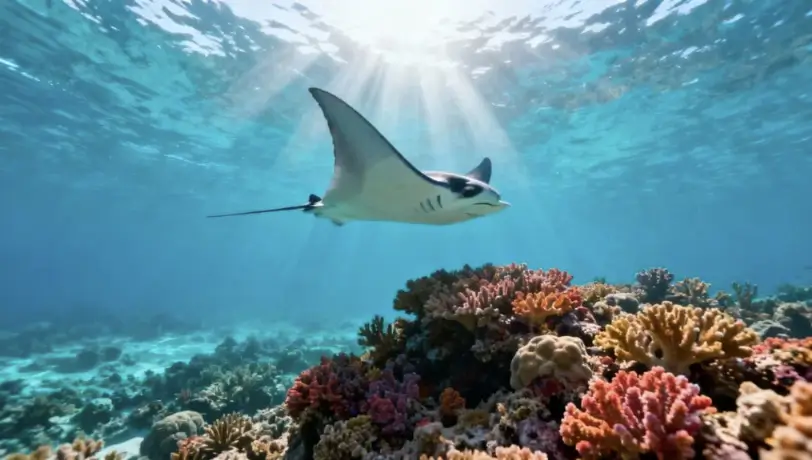
You descend to the reef, settle into a low position, and wait. The manta arrives — sometimes alone, sometimes in a loose group of three or four. It banks slowly overhead, belly facing downward, cephalic fins loosely furled, mouth slightly open. The cleaner fish swarm around its gills and across the underside of its wings.
It circles. It comes back. It hovers directly above you, close enough to see the individual spots that make its belly pattern unique. Some mantas seem genuinely curious — they make eye contact in a way that feels deliberate. Others are completely absorbed in the cleaning process and barely register your presence.
Either way, by the time you surface, the dive will have felt far shorter than your bottom time suggests.
See also: The Complete Guide to Renting Charter Bus in Texas
Atoll by Atoll: Where to Find Them
North & South Malé Atolls
Manta Point is the Maldives’ most famous cleaning station — and for good reason. Reef mantas visit daily, hovering at 12 to 15 metres while divers settle below and watch. It’s accessible, consistent, and delivers encounters that would be the highlight of any dive trip elsewhere in the world.
Ari Atoll
A powerhouse for manta diving. Dhigurah Manta Point in South Ari provides calm, year-round sightings ideal for all experience levels. Maaya Thila — one of the Maldives’ best all-round dive sites — draws mantas at dawn and dusk alongside sharks, reef fish, and dramatic coral pinnacles.
Baa Atoll
Home to Hanifaru Bay, a UNESCO Biosphere Reserve that hosts the largest seasonal manta aggregations on earth. Between June and November, plankton blooms pull in feeding groups of up to 200 mantas simultaneously. Scuba diving is not permitted here to protect the ecosystem — but snorkelling in the middle of a manta feeding frenzy is a spectacle no diver should miss.
Addu Atoll
The remote south, where Lankan Manta Point offers encounters with oceanic mantas — the larger of the two species found in Maldivian waters. Less visited, less crowded, and genuinely extraordinary for divers willing to venture beyond the standard central-atoll itinerary.
Reef Manta vs Oceanic Manta: Know Before You Dive
| Reef Manta | Oceanic Manta | |
| Scientific name | Mobula alfredi | Mobula birostris |
| Typical wingspan | 3 – 4.5 metres | 4 – 7 metres |
| Where found | Cleaning stations, lagoons | Open water, deep channels |
| Best season | Year-round | December – April |
| Best atolls | Malé, Ari | Addu, southern atolls |
Most manta dives in the Maldives involve reef mantas — the more accessible and commonly encountered species. Oceanic mantas require longer itineraries into the southern atolls but reward the effort with some of the most dramatic encounters possible.
The Best Time to Go
November to April (Dry Season) Northeast monsoon brings calm seas, visibility up to 30 metres, and stable conditions. Cleaning stations across Malé and Ari Atolls are at their most active. Ideal for first-time visitors and anyone prioritising water clarity and comfort.
May to October (Wet Season) Southwest monsoon triggers the plankton blooms that power the Hanifaru Bay aggregations. Visibility can drop slightly, but the sheer density of manta activity — particularly in Baa Atoll — is something no other season or destination can match.
Both seasons offer excellent manta diving. The dry season is calmer and clearer; the wet season is more dramatic.
How to Get the Most from Every Manta Dive
A few things that experienced manta divers always do:
Arrive early. Cleaning stations are busiest in the first hours after sunrise. Current is often lighter, and fewer boats mean fewer divers — which means the mantas are less disturbed and the encounters are longer.
Stay low. Position yourself as close to the reef as possible without damaging coral. Mantas approach divers who are low and still far more readily than those hovering mid-water.
Breathe slowly. Bubbles from heavy breathing can startle mantas that come in very close. Slow, controlled breathing keeps you calm, extends your tank, and reduces disturbance.
Let the guide lead. Local dive masters know specific individuals at specific sites. They know which mantas are comfortable with divers and which are skittish. Trust the briefing.
Never touch. Even a fingertip contact removes the protective mucus that shields mantas from bacteria and infection. It is one of the most damaging things a diver can do, and responsible operators are strict about it.
Why the Spirit of Maldives Delivers the Best Manta Experiences
Manta ray diving in the Maldives improves enormously on a liveaboard. The Spirit of Maldives operates dedicated Manta Magic Expeditions — itineraries built specifically around the best manta sites and optimal seasonal timing across multiple atolls.
The boat moves where the mantas are. Its team tracks current conditions, sightings reports, and tidal patterns daily to position divers at the right site at the right moment. Multiple dives per day — typically three to four — mean far more time in the water compared to any land-based alternative.
Rated 4.9/5 on Google and 4.8/5 on TripAdvisor, the Spirit of Maldives combines expert dive guiding with luxury on-board comfort: 13 well-appointed cabins, a jacuzzi sun deck, Starlink internet, and buffet dining with complimentary drinks at dinner.
Final Thought
The Maldives has earned its reputation for manta ray diving honestly — through geography, population, and decades of responsible marine tourism. No other destination offers this combination of reliability, diversity, and scale. Plan your trip around the season that suits your priorities, choose a liveaboard that knows these waters, and come with patience. The mantas will take care of the rest.